
To organize a potluck, set the headcount first, split dishes into categories (mains, sides, salads, bread, desserts, drinks), assign each guest a category instead of a specific dish, and cover the basics yourself: labels, serving utensils, ice, and a plan for keeping hot food hot and cold food cold. That's the whole system. Everything below is how to make each piece easy.
You've probably been to the potluck with seven bags of chips and one lonely lasagna. Or the one where three people brought the same pasta salad. It's nobody's fault. When the only plan is "bring something!" in a group text with 40 unread messages, people guess.
We love a potluck. It's the most generous kind of party: everyone shows up with something they're proud of. A little structure from the host is what lets that happen. Here's the playbook we use.
Before anyone signs up for anything, decide three things:
Send this as one clear message, then stop adding details in the thread.
Here's the thing most people get wrong: at a potluck, nobody eats a full serving of everything. They take a spoonful of eight dishes. So each dish doesn't need to feed the whole group.
A simple rule of thumb that works well:
For a group of about 24 people (say 10 households), a balanced split looks like:
| Category | Number of dishes |
|---|---|
| Mains | 2–3 |
| Sides (warm) | 2 |
| Salads or veggies | 2 |
| Bread or appetizers | 1–2 |
| Desserts | 1–2 |
| Drinks and ice | 1 |
Scale up or down from there. If more than 30 people are coming, add a second main and a second dessert before adding anything else.
This is the trick that ends the duplicate pasta salad problem. Give each person a category and let them choose what to make inside it.
People still bring their favorite thing, you control the balance of the table, and "we still need a salad" is an easy ask.
A few tips for the sign-up itself:
As the host, you're usually making the main or the anchor dish, plus covering the stuff nobody signs up for. That's where the planning actually lives.
In Tradish, you can make a named meal plan for the event itself, like "Fall Potluck," with a start and end date. Add the recipes you're making yourself to the right day and meal time so the event has its own little plan, separate from your regular weeknight dinners.
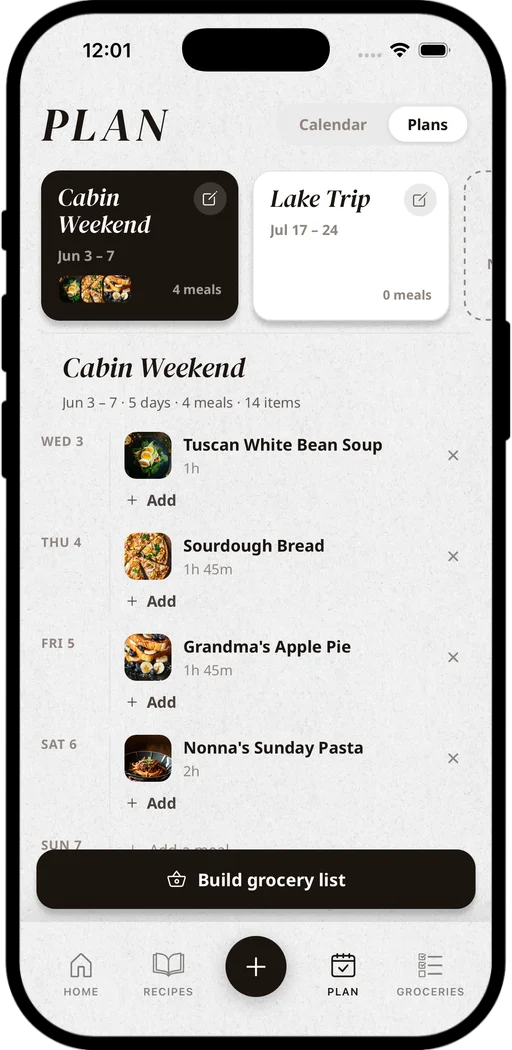
The Plan screen with named plans, each holding its own meals by day, plus a button to build a grocery list.
Then tap Build grocery list and choose which meals to include. Tradish adds up quantities across recipes and removes duplicates, so if your main and your side both use onions, you see one combined line. The grocery list is grouped by aisle, and you can add the non-recipe extras by hand: ice, cups, foil, napkins.
The host extras list most people forget:

Tradish is launching on iOS and Android soon. Plan your own potluck dishes, build one combined grocery list by aisle, and cook from a calm, step-by-step screen. Join the waitlist for early access and our best launch price.
Labels are the most underrated potluck move. They save you from answering "is this vegetarian?" forty times, and they protect guests with allergies.
Each label should have:
Folded index cards work beautifully, or a strip of painter's tape on the table in front of each dish. Ask guests ahead of time to tell you about allergens so you can write the cards before people arrive, or set out blank cards and a pen by the door.
You don't need to be a food scientist. A few basics cover most of it:
Good flow makes a potluck feel easy. A few layout tips:
Plan one dish per household, with each dish serving roughly a third to half of the total group. Because guests take small portions of many dishes, that's usually plenty. If you're nervous, have the host make an extra-large main.
The classic categories are mains, warm sides, salads or veggies, bread or appetizers, desserts, and drinks or ice. Assign categories instead of specific dishes so people can still bring what they love while the table stays balanced.
For the guest sign-up, a simple shared spreadsheet or sign-up sheet works well. For the host's own planning, a recipe and meal planning app helps you organize what you're making, combine ingredients into one grocery list, and cook it. Tradish is built for that host-side planning and is launching on iOS and Android soon.
Perishable food should sit out no more than 2 hours, or 1 hour when it's above 90°F. Keep hot dishes in slow cookers or chafing dishes and cold dishes nested in ice to stretch that window safely.
Yes. A label with the dish name, the cook, and common allergens helps guests with dietary needs and saves the host from answering the same questions all night.
A potluck works best when the host does a little planning up front and then gets to enjoy the party. Lock the headcount, assign categories, label, keep food at the right temperature, and set out the right gear. Then the only thing left is going back for seconds.
If you want one place to plan your dishes, build your grocery list by aisle, and cook without juggling tabs, that's what we're building. Tradish is launching on iOS and Android soon. Join the waitlist to be first to know when we launch.
Related reading: