

Hosting Friendsgiving well comes down to one decision: you make the centrepiece and almost nothing else. Assign everyone a category rather than a dish, ask for things that don't all need the oven, and spend your energy on there being enough chairs and ice. The cooking divides easily. The hosting is the part that doesn't.
The version that goes wrong is the one where the host quietly makes nine dishes and reappears at the table looking exhausted while everyone says it's lovely.
Friendsgiving usually lands on a weekend in the two or three weeks before Thanksgiving, which keeps it clear of family travel. The weekend immediately before is the most popular, which also means it is the one everyone else is claiming.
So send the date out early. November books up in October, and the single biggest factor in who comes is who you asked first.
Include three things in that first message: the date and time, whether there is oven space or outlets for a slow cooker, and a request for dietary needs. Then stop adding details in the thread.
Take the main and leave everything else on the table to be divided.
You do not need a turkey. A roast chicken, a ham, or a big tray of something all work, and several of them are easier to cook and carve in a flat. The centrepiece matters because it anchors the table, not because of what species it is.
Then assign categories, not dishes:
People still bring the thing they are proud of, you keep the table balanced, and "we still need a salad" becomes an easy ask instead of an awkward one.
Ask everyone to reply with what they have actually picked. Two mac and cheeses can be fine; two identical ones is a shame. Our potluck guide has the full version of the sign-up, including the headcount maths.
This is the Friendsgiving-specific problem. A family Thanksgiving has one cook and one oven. Friendsgiving has eight cooks and still one oven, and everyone arrives at six with a dish that wants 375°F for forty minutes.
Head it off in the ask:
If you end up with four casseroles anyway, stagger them and serve in waves. Nobody minds eating in two acts at a party.
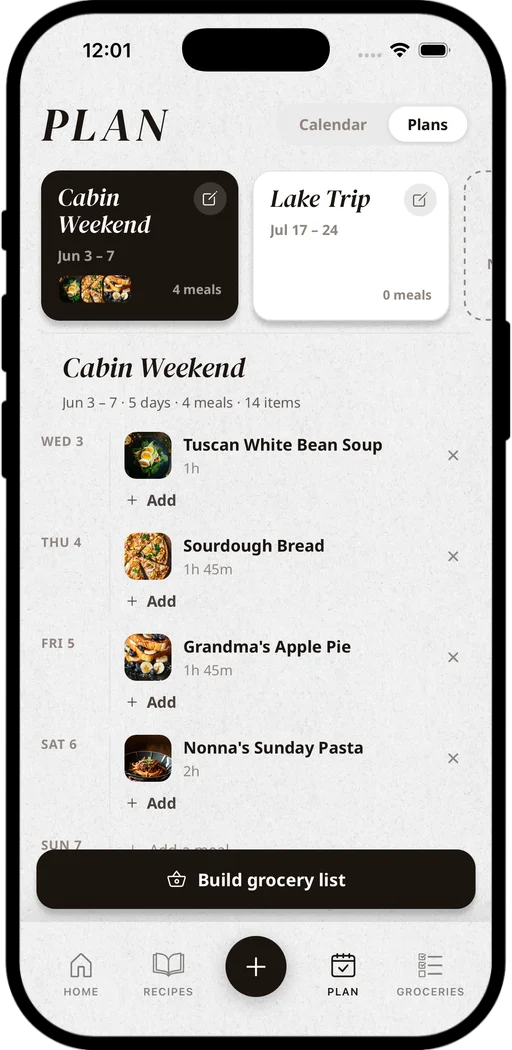
A named plan for the event, separate from the week's dinners.
For your own dishes, a named meal plan for the event keeps the Friendsgiving cooking apart from your ordinary week, and builds one grocery list from it rather than three.

Tradish is launching on iOS and Android soon. Plan what you are making, build one grocery list by aisle, and cook from a calm step-by-step screen. Join the waitlist for early access and our best launch price.
The flat-sized version, which is most Friendsgivings.
Serve buffet-style from a counter. Trying to seat twelve at a table that takes six is the thing that makes a small space feel small. Plates in hand and people on sofas, windowsills and the floor is a party; a cramped table is an ordeal.
Borrow chairs before you borrow space. Four extra chairs transform a room more than rearranging it does.
Clear a surface for arriving dishes, because eight people turning up holding casseroles with nowhere to put them is its own small crisis.
Somewhere for coats, which sounds trivial and is not, in November.
More ice than you think, and somewhere cold that is not the fridge, because the fridge will be full.
Worth remembering while you are deep in the logistics: nobody will remember how many sides there were.
Put music on before the first person arrives. Have something to drink in people's hands within a minute of the door. Eat later than you think, because people like the standing-around part more than they admit. And sit down and eat with everyone rather than hovering — the single most common Friendsgiving regret is the host spending it in the kitchen.
If it helps: the food was always going to be fine. Eight people brought a dish they were proud of. That part is already handled.
Most people hold it on a weekend in the two or three weeks before Thanksgiving, so it doesn't compete with family plans. The weekend before is the most common, and booking it early is how you get everyone.
The turkey or whatever the centrepiece is, plus the things nobody volunteers for: ice, drinks, plates and somewhere to sit. Everything else divides well among guests.
Give people a category rather than a specific dish, so mains, warm sides, salads, bread, dessert and drinks. People bring what they are proud of and you still control the balance of the table.
Serve buffet-style from a counter rather than seating everyone, ask for dishes that travel at room temperature so they don't all need the oven, and borrow chairs before you borrow space.
No. Plenty of Friendsgivings run on a roast chicken, a ham, or a big tray of something. The point is the table being full and everyone having brought something, not the specific bird.
Take the centrepiece, hand out categories, ask for half the table to be happy at room temperature, and spend the rest of your attention on chairs, ice and music.
Then sit down and eat with everyone, which is the whole reason for having it.
Tradish is launching on iOS and Android soon. Join the waitlist to be first to know when we launch.
Related reading: