

A Christmas menu is built in this order: pick the main, pick four or five sides, then check how many of those sides need the oven during the hour the main is resting. If the answer is "more than fits," the menu is not finished yet.
That last check is the one that gets skipped, and it is the whole difference between eating at four and eating at six.
Beef, turkey, ham, goose, a crown, a vegetarian centrepiece — all of them work, and the choice matters less than people think. What matters is the two numbers that come with it: how long it cooks, and how long it rests.
Beef wants the shortest oven time of the traditional options and a 20 to 45 minute rest depending on size. Turkey wants the longest cook and a 30 to 40 minute rest. Ham is the easy one, because it can be cooked the day before entirely. Goose renders a great deal of fat, which is excellent for the potatoes and worth planning a tin for.
For a smaller table, a joint or a crown beats a whole bird on every measure: faster, easier to carve, and it still leaves leftovers.
Whichever you choose, the resting hour is non-negotiable, and it is also when the oven becomes free. That is the hinge the rest of the menu turns on.
The temptation at Christmas is more than at Thanksgiving, because everyone has a thing that has to be there.
Four or five is plenty. The test is the same: would the table notice if it were missing? Roast potatoes pass in every household in the country. The third green vegetable usually does not.
A balanced five, as an example:
Then sauces: gravy, and one or two of bread sauce, cranberry, apple, horseradish depending on the main.
Here is the check. Write the sides out and mark which need the oven.
During the main's rest you have roughly 30 to 45 minutes of oven at roasting temperature. Roast potatoes need most of that on their own. So the realistic oven column is: potatoes, plus one other thing, plus maybe a casserole going in alongside.
If you have marked four dishes as oven dishes, two of them need to move:
Doing this in November is a five-minute job. Doing it at three o'clock on the day is a crisis.
Christmas differs from Thanksgiving in that the morning is already spoken for. Breakfast, presents, people in the kitchen for no reason. So the make-ahead list matters more.
Christmas Eve: parboil the potatoes, make the bread and cranberry sauces, make the stock, prep every vegetable, assemble any casseroles, set the table, and get the breakfast assembled so it goes in cold.
Days before: the dessert, almost always better for it. Anything frozen from your baking schedule.
Christmas Day: roast one thing, reheat several, make a gravy. Our Christmas dinner timeline has the hour-by-hour once the menu is settled.
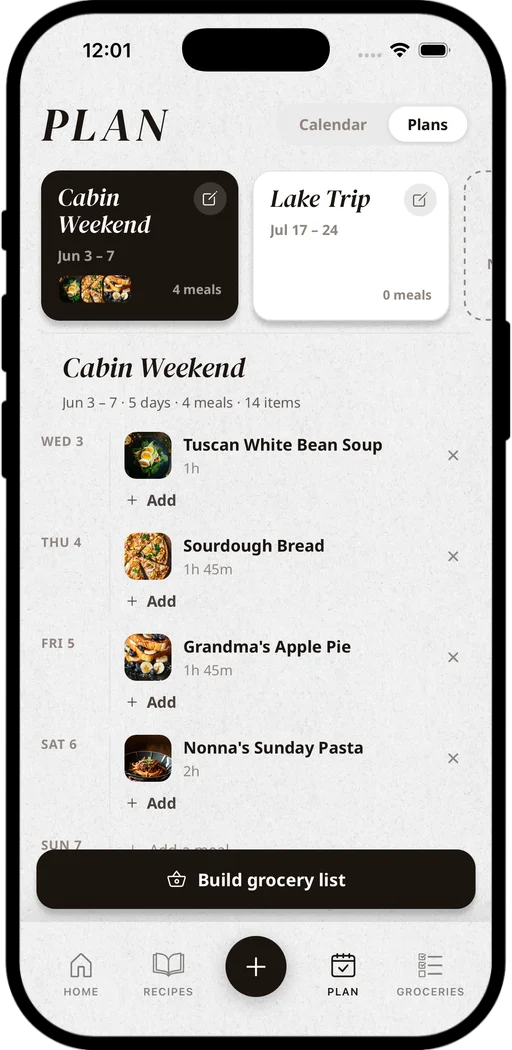
A plan for the event, with each recipe on the day it gets made.
In Tradish, a named meal plan for Christmas keeps it separate from the week's dinners, and you can put each recipe on the day you cook it rather than the day it gets eaten, which is what makes the Christmas Eve list visible rather than remembered.

Tradish is launching on iOS and Android soon. Plan the menu, build one grocery list from it, and cook the day with every dish on its own timer. Join the waitlist for early access and our best launch price.
Christmas shopping has the same trap as Thanksgiving: five recipes each wanting cream, four wanting butter, and the totals only becoming apparent in the shop.
Build the list from the whole menu in one go, so shared ingredients combine. Tradish does it from the plan, summing across recipes and sorting by aisle, and you add the things no recipe mentions — foil, containers, the good butter for the table, more cream than anyone admits to.
If you are four rather than twelve, the menu scales down better than the shops would have you believe.
A joint or a crown, three sides, one dessert, no second main. You keep everything that makes the day and lose the part where someone is basting at two in the afternoon. The leftovers are still plentiful, because the point of Christmas leftovers is the sandwiches and a smaller joint produces plenty of those.
What does not scale down: the roast potatoes. Make the full quantity regardless of headcount. Nobody has ever regretted it.
One main, four or five sides, a sauce or two, and one dessert. Beef, turkey, ham, goose and a vegetarian centrepiece all work. The main matters less than whether the sides can share an oven with it.
Four or five, counting the potatoes. The limiting factor is the oven during the main's resting hour, not appetite, so count how many of them need to roast before you commit to them.
Parboiled potatoes, bread and cranberry sauces, stock, prepped vegetables and assembled casseroles all keep from Christmas Eve. Most desserts are better made a day or more before.
Cook a joint or crown rather than a whole bird, keep to three sides and one dessert, and skip the second main entirely. The day feels the same and the afternoon is yours.
If you want one, cook it the day before and glaze it on the day or serve it at room temperature. Two mains competing for the same oven on the afternoon itself is the most reliable way to eat two hours late.
Pick the main, choose the sides the table would miss, then count how many need the oven during the resting hour and move the rest. Push everything possible to Christmas Eve, and the day becomes one roast and some reheating.
Tradish is launching on iOS and Android soon. Join the waitlist to be first to know when we launch.
Related reading: